
La Safor
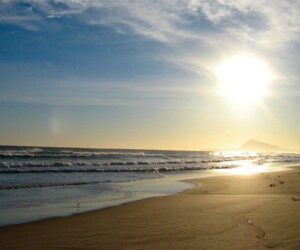
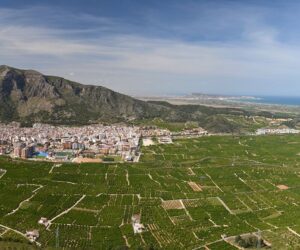
La Safor is an attractive region, divided between the coast and mountainous interior. The natural habitat of the high mountains of Mustalla, Safor, Agulles and Grossa is rich with vegetation, while the coastal border is made up of plains of wide groves, long beaches and also a dense urban area. The proximity of the three distinct landscapes which make up the region give La Safor the characteristic of an urban hive or a large dispersed city surrounded by greenery, which is dedicated to its major industry, the cultivation of oranges. Mountain summits are situated close by the sea, whilst orange groves are hidden between the slopes of the mountainsand wide horizons with long beachesare visible, all of which makes up the landscape of La Safor, an enduring spectacle throughout the year.
Municipalities
-

Ador
As in other towns and villages in La Safor, remains revealing the existence of life 3000 years BC have been discovered in Ador. (Neolithic). “El Barranco del Figueral” cave in the “Els Ninets” mountain, where a Neolithic burial was discovered, has served as an open book to archaeologists. ROMAN ADOR: The archaeological remains, the most important from this period to have been found in this administrative region, were discovered in the area known as “Raconch”, on the l’Alfas plain, and represent valuable material for the study of the Roman era in our area. In addition to the large number of objects found, it was determined that a mansion once stood on the site, equipped with a heating system that was highly-unusual for the period. ARABIC ADOR: The name of Ador seems to be of Muslim origin and means “irrigation round”. Ador.
-
Alfauir
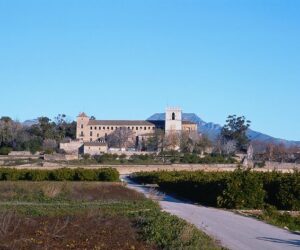
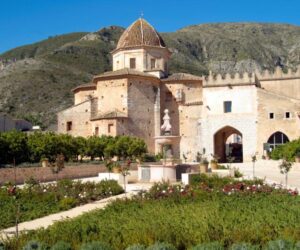
Alfauir is located between the mountain ranges of Ador and La Falconera, and its most prominent monument is the Monastery of St. Jerome of Cotalba, with its aqueduct, cloisters, church and tower. The climate is temperate, with mild winters and relatively warm summers. The annual rainfall is usually high, and concentrated in autumn and winter.
-
Almiserà
–
-
Almoines
A small village in the administrative region of La Safor, which stands out for its Parish Church. The name of the village of Almoines means “alms” in Valencian.
-
Bellreguard
Nestled in the centre of the alluvial plain of La Llacuna, between the foothills of the Sierra Gallinera range, the right bank of the River Serpis and the Mediterranean Sea. The village has two main centres: that of the village itself, which lies between Gandia and Oliva and is crossed by the N-332 Valencia to Alicante road, and Playa de Bellreguard, which lies on the coast. The coastline has been completely developed, with the visitors in summer doubling the population.
-
Beniarjó
Beniarjó is the birthplace of the most famous Valencian poet, Ausiàs March. When visiting the village, a visit to the Church of Saint John the Baptist is a must. Plans are underway to create an Ausiàs March Museum, dedicated to commemorating the poet’s contribution to universal culture.
-
Benifairó de la Valldigna
Benifairó is located in the heart of natural administrative sub-region of La Valldigna (La Safor). The ruins of the castle of d’Alfandec preside over the village. The Parish Church of Saint John the Evangelist (17th century) is the most prominent religious building. Its numerous natural sites include “Els Clots”.
-
Beniflà
–
-
Benirredrà
Almost forming a part of the town of Gandia, its most prominent buildings are the Convent of the Servants of the Heart of Jesus, of which mention may be made of its majestic towers, and the Parish Church of Saint Lorenzo.
-
Castellonet de la Conquesta
Castellonet de la Conquesta is the second smallest village in the administrative region of La Safor, and the smallest of the five villages that make up la Cuenca de Vernisa. There were 240 inhabitants in the village in 1940. This was largest known population in its history. Its municipality covers an area of 5.4km. This mountain village is without doubt the most rural, singular and picturesque of the administrative region. It was formerly known as Castellonet de Santa Fe. It is also said that it was seaport, perhaps due to its being the first village between the sea and the interior. At entrance to the village, with its Roman arch, we find traces of the small fortress that used to stand on the site. The other entrance to the site can be found in the lower part of the village, next to the lavoir, known as “La Albacara”, and which is of Arabic origin. The festivities held in honour of the village’s patron saint, Saint James, are celebrated on 25th July and the nearest weekend to the date. Castellonet has a rich history of which little is known. In order to remedy this situation, a process has been launched to conduct an investigation into the village’s origins, anecdotes, legends and customs with the aim of publishing a book on the municipality’s past and present history, as well as the measures and work being implemented in favour of the conservation, development and structuring of the villages within La Cuenca de Vernisa. TOURIST INFORMATION TELEPHONE: 962887028 (Council)
-
Daimús
Daimús is an agricultural village which retains the typical features of its past, and which also has a very fine beach: Los Pedregales, with golden sands and moderate waves. The geomorphology of the municipality is gentle. It is crossed by the Daimuz irrigation canal, whilst La Azagador irrigation canal serves as a southern border with the municipality of Guardamar de La Safor. Within its 3.10 km2, there are two clearly differentiated zones: the lowlands that make up the coastal area and the old marsh, and the area where the village is located.
-
Gandia
The city of Gandia is the heart of the Valencian administrative region of La Safor. Gandia has a privileged location, between the sea and the mountains. Within the city, one is surrounded by a rich historical heritage that permeates the monuments and the spirit of the people. This is one of the biggest attractions of a city whose tourism sector is capable, through its infrastructure and variety, of satisfying the most demanding visitors. A visit to Gandia allows you to discover a very special city. Its beach, its historical centre linked to the most universal Valencian family (els Borja – the Borgia) and its natural environment provide the city with a unique quality that combines the warmth of Mediterranean destinations with a powerful tourist appeal. To live Gandia means to live the Mediterranean, to live “la fiesta”, gastronomy, nature, sport …. Gandia reveals all its possibilities to you in order that you may choose the one you like the most. Visit Gandia, and live it!
-
Guardamar de la Safor
A small coastal village within La Safor administrative region, with an attractive coastline replete with dunes and wetlands. It has beaches of fine, golden sand and moderate waves. The village’s most notable monument is the parish church, dedicated to the Nursing Madonna and Saint John the Baptist. Located on one of the highest points along the coast, from where the houses look out over the sea.
-
L´alqueria de la Comtessa
Mention may be made of the Parish Church of Saint Peter and Saint Paul, located in a natural setting of great beauty. There are Iberian remains in the municipality.
-
La Font d´en Carròs
–
-
Miramar
–
-
Oliva
The tourist town of Oliva has many things to offer: Oliva has sun and beaches, mountains, wetlands, hot springs, Oliva has a historic centre, historical heritage, museums, sports facilities, Oliva has municipal sports facilities at the service of all, tennis, paddle tennis, sailing, football, basketball, Valencian “pelota”, heated swimming pool …, Oliva has traditional pagan and religious festivities,… Oliva Beachs: Les Deveses, Aigua Morta, Aigua Blanca, Pau Pi y Terranova
-
Palma de Gandia
Cave paintings, located in Partida Quintanes. “Maravelles” Cave. A site on the River Vernisa known as “l’Assud”.
-
Palmera
This small village is located near to Gandia, the capital of the La Safor administrative region. Its most notable building is the Parish Church of the Immaculate Conception.
-
Piles
Watchtower on the coast, the church of Saint Barbara, golden sand beach and beautiful dunes that, together with the local vegetation, give the landscape the exotic air of the typical Valencian wetland. The village is surrounded by orange groves. Piles beach
-
Potries
Potries is a small village located in the heart of the bountiful Valencian administrative region of La Safor, halfway between the exceptional local beaches and the mountain ranges that lie to the south-west. The most prominent local peak is La Safor, which rises some 1013m above sea level. The municipality covers an area of 3.2 km2 and borders with the municipalities of Beniflá, La Font d’en Carros, Vilallonga and Ador. The mostly flat terrain is suitable for the different crops that have been grown in the area throughout history. An exception is represented by the small foothills in the south of the municipality: at the foot of “Els Tossalets”, measuring a little over 100m in height, lies the village. The River Serpis borders the municipality to the east, constituting its most significant geographical feature and a natural area of unique beauty. In fact, the River Serpis and its surroundings have been declared a Valencia Region Protected Area for their “scenic, ecological and cultural value, derived from a harmonious historic relationship between man and the environment” (Decree 39/2007). The climate is characterized by relatively mild winters and hot summers, with average temperatures throughout the year ranging between 13 to 25 degrees. Rainfall is concentrated mainly in the autumn and the spring. Potries currently has a population of 1,056 inhabitants.
-
Rafelcofer
The municipality of Rafelcofer dedicated to the cultivation of citrus fruits. The village’s main building is the Parish Church of Saint Anthony and Saint Diego.
-
Real
Real de Montroy, also known as Real, is located in the Ribera Alta administrative region. It lies 27 km from Valencia and has a population of about 2,300 inhabitants. The River Magro crosses the municipality, and its waters are used to irrigate the local agricultural land. The local mountains include “La Serreta”, “El Espolón”, “El Carruchal” and the hills of “Peñasco” and “Sogroy”. Its economy is based mainly on dryland and irrigation agriculture.
-
Real de Gandia
The Parish Church of the Presentation of the Virgin, as well as the prehistoric remains located at “Barranco del Nano”, the “Bolta”, “Cingle” and “Dels Porcs” caves.
-
Ròtova
Ròtova is an agricultural village located in the administrative region of La Safor and the sub-administrative region of Vall de Vernisa. It has been declared a tourist town by the Valencia Regional Government due to porrat de Sant Macià.
-
Simat de la Valldigna
In addition to a detailed visit to the monastery of the Valldigna , we highly recommend a stroll to the ancient mosque of La Xara (current Hermitage of Saint Anna), which still retains Moorish arches and architectural elements that are unique in the Valencia Region. Near the monastery lies the “Font Gran” spring, whose waters irrigate much of La Valldigna’s agricultural land. In the area around “Font Gran” there is a recreational area, which serves as a meeting place for the residents of Simat and which is extremely pleasant, especially on summer nights. There are two natural areas in the vicinity of Simat that are popular in the summer: Pla de Corrals (on the Jativa road) and Les Foies (which is accessed via the same road that leads to Barx). By taking the latter, it is possible to visit the 18th century Les Arcades aqueduct, which carried water from the “Font del Cirer” spring to the monastery.
-
Tavernes de la Valldigna
The town of Tavernes de la Valldigna is the largest in La Valldigna, a horseshoe-shaped valley surrounded by mountains and open in the east to the plains of the Mediterranean coast. Tavernes is part of La Safor, the southernmost administrative region in Valencia.
-
Villalonga
A village of Muslim origin, the most notable monuments of which include the Hermitage of Saint Anthony and Saint Barbara (on the Calvary Mount). The neoclassical Church of the Holy Kings (18th century) is located in Plaza de la Fuente. There is a 16-spout fountain and the Chapel of Our Lady of the Fountain (18th century) in Plaza de la Fuente. There are also remains of a Moorish castle. The municipality of Villalonga also has numerous natural sites of interest, including “Raco del Duc” and “Circ de la Safor”, as well as “l’Almirant”, “La Replimala” and the “la Safor” Ravine.
-
Xeraco
Xeraco is a municipality located in the Valencia Region, in the south of the province of Valencia and in the administrative region of La Safor. It lies 56 km from the city Valencia and only 5 km from Gandia. Xeraco borders on the north with Tavernes de la Valldigna, on the east with the Mediterranean Sea, on the south with Xeresa and Gandia, and on the west with Benifairó and Simat de la Valldigna. Xeraco has a population of just over 6,000 inhabitants. The municipality of Xeraco covers an area of 20.2 square kilometres. In the municipality of Xeraco we find beaches, mountains, wetland and a large agricultural area. The climate is very mild throughout the whole year. One of Xeraco’s most notable features is its extensive beach, measuring some 3km in length. It enormous natural dune ridges and clean waters make it one of the province of Valencia’s highest-quality and most peaceful beaches. In addition to the town’s significant tourist and environmental heritage, such as the historical centre and its surrounds, Xeraco also offers different historical sites of interest, such as the Church of Our Lady of the Incarnation, the Guaita Tower, Cistern and the Chapel of Holy Christ of Agony.
-
Xeresa
Xeresa

Tourism offices
Tourist Info La Font d’En Carròs
Tourist Info Xeraco
Tourist Info Tavernes de la Valldigna
Tourist Info Ròtova
Tourist Info Oliva
Tourist Info Miramar
Tourist Info Simat de la Valldigna
Gastronomy and events:
The local Mediterranean farms produce natural ingredients used in the preparation of some truly excellent food. In Gandia, you can enjoy the world-famous fideuà de Gandia, prepared with angel hair pasta cooked in a stock of langoustines, shrimp and monkfish, all cooked in the traditional Paella style pan. We also recommend that you try the fish and seafood on the coast of La Safor, particularly the eels and the gambaambbleda (a spinach and shrimp dish) in the coastal villages.Towns in the interior of the region specialize in sausages, rice dishes of every kind, figatells (a type of open sausage) and coques de dacsa (a rice cake). Alongsidethis, thesweets and cakes of region are also noteworthy. These are present throughout the whole region and are reminiscent of the sugar cane harvests.
From the Porrat de SantAntonito the Ball de la Bandera in Beniarjó (April), through to the festivals held in honor of the Virgin Mary (May, Real de Gandia), and les fogueres de Sant Joan (the bonfires of Saint John, held throughout the region in June), La Safor celebrates a whole host of festivals. The rutadelsporrats stands out, and is celebrated year round in various parts of the region. The porrats are pilgrimages which are celebrated traditionally by the people of the region to venerate their saints, and go on to become festivals with markets selling fruit, nuts, toys and much more. Currently, the popularity of the festivals is growing, due to the enjoyable and interesting events which run concurrently. The porrats currently celebrated are, in winter,SantAntoni (January) in Oliva andBenirredrà, SantBlai in Potries and SantMacià in Ròtova (February); also insummer, SantLlorenç and Crist de la Sang in Tavernes de la Valldigna, Santa Anna in Simat de la Valldigna and Sants de la Pedra in l’Alqueria de la Comtessa
Equally outstanding are the festivals of the Moors and Christians held in Oliva (the third weekend in July), the heritage festivals of the Mare de Déu del Rebollet (September 8), and, of course, la Fira I Festes de Gandia, celebrated in honor of Saint Francesco de Borja (late September and early October). Gandia, Oliva, Tavernes de la Valldigna, l’Alqueria de la ComtessaiXeraco, fill up with surprising Fallas monuments, for the festival of Saint Joseph (Sant Josep). These are Fallas festivals which, in the case of Gandia, have been declared of National Public Interest. Finally, and equally renowned for the lively celebrations held there, are the Easter festivals, which include emotional religious celebrations and incredible processions, such as those in Santa de Gandía, which also have been declared of National Tourist Interest.


